How Your Driving Style Directly Impacts Your Brake Pad Lifespan
Compact U-shaped kitchen maximizes space with smart layout and bright design
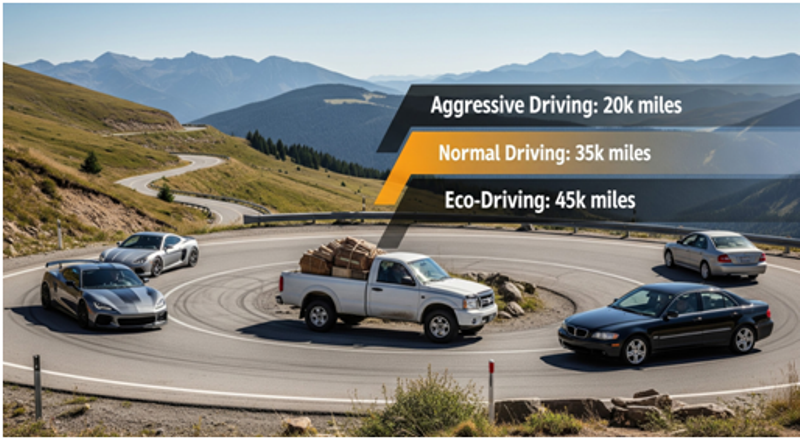
Have you ever wondered why your friend gets 70,000 miles out of their brake pads, while yours are completely worn out at 30,000, even on a similar car? While factors like vehicle weight and brake pad quality play a role, the single biggest variable determining brake pad lifespan is often the person sitting in the driver’s seat.
Your brake pads are a consumable item, much like the soles of your shoes. Every time you press the brake pedal, you use up a tiny fraction of their service life. How you drive—aggressively or gently, in the city or on the highway—dictates how quickly you “spend” that finite lifespan. Understanding this direct connection empowers you to change your habits and get significantly more miles from every brake job.
The “Brake Spenders”: Habits That Burn Through Pads
Certain driving styles are incredibly demanding on your brakes, rapidly accelerating wear and leading to more frequent and costly replacements.
- The Aggressive Driver (The Sprinter): This driver treats every traffic light like a starting line. They accelerate hard from a stop only to brake hard at the next light. They tailgate, forcing them to react with sudden, forceful braking instead of gentle deceleration. This style generates immense heat and requires maximum friction to slow the vehicle, physically eroding the brake pad material at the fastest possible rate.
- The City Dweller (The Stop-and-Go Specialist): Even if the braking is gentle, the sheer frequency of city driving takes a heavy toll. A driver navigating a dense urban environment might use their brakes ten times more per mile than a highway commuter. Every small application of the pedal contributes to the cumulative wear. This high-frequency use means city-driven cars will almost always require more frequent brake replacements than their highway-cruising counterparts.
- The Two-Footed Driver (The Rider): This habit, often subconscious, involves resting the left foot on the brake pedal while driving. Even the slightest pressure is enough to keep the brake pads in light contact with the rotors. This creates constant friction, preventing the brakes from ever fully disengaging or cooling down. It leads to a phenomenon called “glazing,” where the pad surface hardens from the constant heat, reducing its effectiveness and causing continuous, accelerated wear.
The “Brake Savers”: Habits That Extend Pad Life
On the other side of the spectrum are driving styles that preserve brake pads, maximizing their lifespan and saving the driver money.
- The Defensive Driver (The Planner): This driver’s greatest skill is anticipation. They look far down the road, spotting red lights, slowing traffic, and potential hazards well in advance. Instead of waiting until the last second to brake, they lift their foot off the accelerator and coast, letting the car’s natural momentum slow it down. They use the brake pedal only for the final part of the stop. This converts the car’s energy into coasting distance instead of wasted heat, dramatically saving pad life.
- The Highway Cruiser (The Coaster): A vehicle that spends most of its time at a steady speed on the open highway is living the ideal life for brake longevity. The brakes are used so infrequently that the pads can easily last for 70,000, 80,000, or even more miles. This scenario highlights just how much impact frequency of use has on overall wear.
- The Hill Expert (The Engine Braker): When facing a long, steep downhill grade, the brake-spender will ride their brakes the entire way down, generating massive amounts of heat and wearing down the pads. The brake-saver, however, will shift to a lower gear (such as D3, L, or by using paddle shifters). This engages “engine braking,” using the engine’s natural resistance to help control the vehicle’s speed. This simple technique takes a huge load off the brakes, keeping them cool and ready for when they’re truly needed, all while saving significant pad material.
Ultimately, you are in direct control of your brake pad lifespan. By consciously shifting from “spender” habits like tailgating to “saver” habits like coasting and looking ahead, you can make a significant financial impact. To get a better sense of general replacement intervals, you can read more about how often you should change brake pads. Adopting a smoother driving style is the best free upgrade you can give your vehicle, saving you hundreds of dollars over its lifetime.