AI-Powered SEO vs Traditional SEO: What Actually Changed
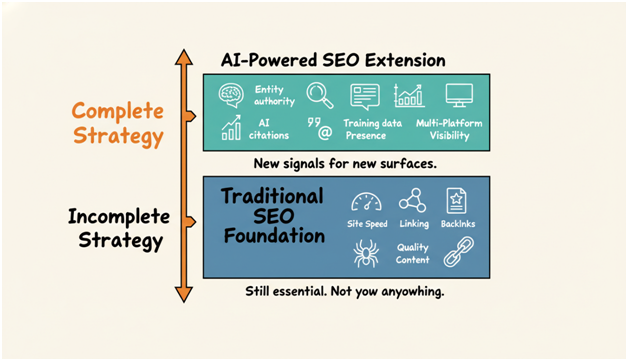
The SEO industry loves declaring everything dead. Traditional SEO is not dead. But it is no longer sufficient. The real question is not which approach wins. It is what changed and what stayed the same.
Conflating the two costs you budget and focus. Here is a clear breakdown.
What Most Comparisons Get Wrong
Most articles comparing AI-powered SEO to traditional SEO frame it as a binary choice. Pick one or the other. That framing misses the point entirely.
Traditional SEO fundamentals still work. Crawlability, site speed, internal linking, and quality content remain essential. Nothing about AI search invalidated those principles. The mistake is assuming those fundamentals are enough.
AI-powered SEO does not replace traditional SEO. It extends it. New surfaces like ChatGPT, Perplexity, and Google AI Overviews require additional signals: entity authority, content structure for extraction, and brand presence across training data sources. Ignoring these surfaces means ignoring where your audience is shifting.
The worst advice treats AI SEO tools as a substitute for strategy. Running content through an AI rewriter is not AI-powered SEO. It is automation without direction.
The choice is not between AI SEO and traditional SEO. The choice is between a complete strategy and an incomplete one.
What Actually Changed
Discovery Happens in New Places
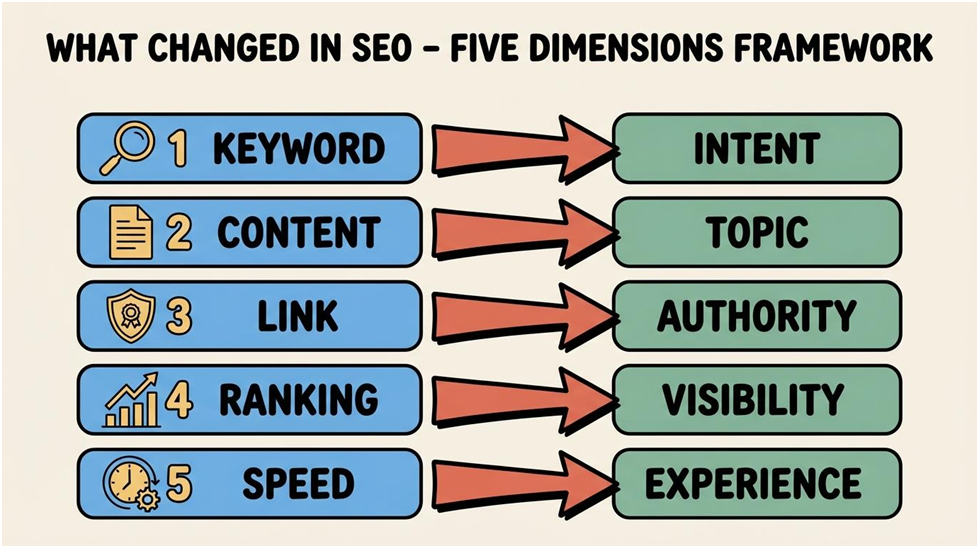
Your audience now finds answers in ChatGPT, Perplexity, Copilot, and AI Overviews before clicking a single search result. Traditional SEO focuses on ten blue links. AI-powered SEO accounts for AI-synthesized answers where your brand may or may not be cited. The discovery surface expanded. Your optimization scope must expand with it.
Content Structure Matters More
Traditional SEO rewarded long-form content with keyword density. AI engines reward structured, extractable content. Clear headings, direct answers, supporting evidence, and semantic HTML help AI systems parse and cite your pages. A 3,000-word article with no structure performs worse in AI results than a 1,000-word page organized for extraction.
Authority Signals Shifted
Backlinks still matter for Google rankings. But AI engines weigh brand mentions, citations in authoritative publications, and entity recognition differently. A brand mentioned frequently across Wikipedia, research papers, and industry reports gets cited more often by LLMs. Teams investing in ai search optimization build authority across both link-based and mention-based signals.
Measurement Got Harder
Traditional SEO has mature measurement: rankings, organic traffic, conversions. AI visibility measurement is still nascent. You need to track citations in AI responses, referral traffic from AI platforms, and brand mentions in LLM outputs. Most analytics stacks do not capture this yet. Building custom tracking is now part of the job.
Speed of Change Increased
Google’s algorithm updates were quarterly events. AI search surfaces update continuously. Model retraining, retrieval system changes, and new AI products launch monthly. Your optimization cadence must accelerate. Annual SEO audits are insufficient when the landscape shifts weekly.
Practical Tips for Bridging Both Approaches
Audit Your Presence Across All Search Surfaces
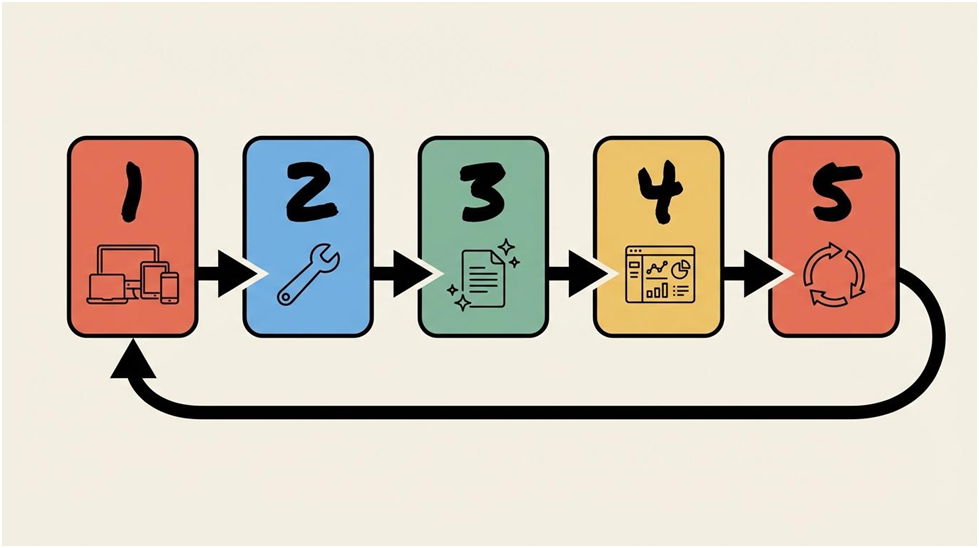
Do not limit your audit to Google rankings. Search your core queries in ChatGPT, Perplexity, and Google AI Overviews. Document where you appear and where you do not. This cross-platform audit reveals gaps that traditional rank tracking misses entirely.
Keep Technical SEO Foundations Strong
Crawlability, site speed, mobile experience, and clean architecture still matter. AI crawlers need accessible content just like Googlebot. Neglecting technical fundamentals undermines both traditional and AI visibility. Fix the basics before chasing advanced AI optimization.
Layer AI-Specific Content Optimization
Take your top-performing pages. Add direct answers in the first paragraph. Implement FAQ schema. Structure content with clear H2 and H3 headings. These changes improve AI extractability without hurting traditional rankings. Professionals who specialize in ai search optimization treat this as a standard operating procedure on every page they touch.
Build a Combined Measurement Dashboard
Track traditional metrics alongside AI-specific ones. Create segments for AI referral traffic. Monitor citation frequency in AI responses. Combine both datasets into a single view. This dashboard shows the full picture of your search visibility.
Run Two-Week Optimization Sprints
The speed of change demands shorter iteration cycles. Make a content change. Measure its impact on both Google rankings and AI citations after two weeks. Adjust and repeat. Long project timelines hide whether your efforts worked.
The Convergence Is Already Happening
Google itself is merging traditional and AI search. AI Overviews sit atop traditional results. The distinction between “traditional” and “AI” search will blur further every quarter.
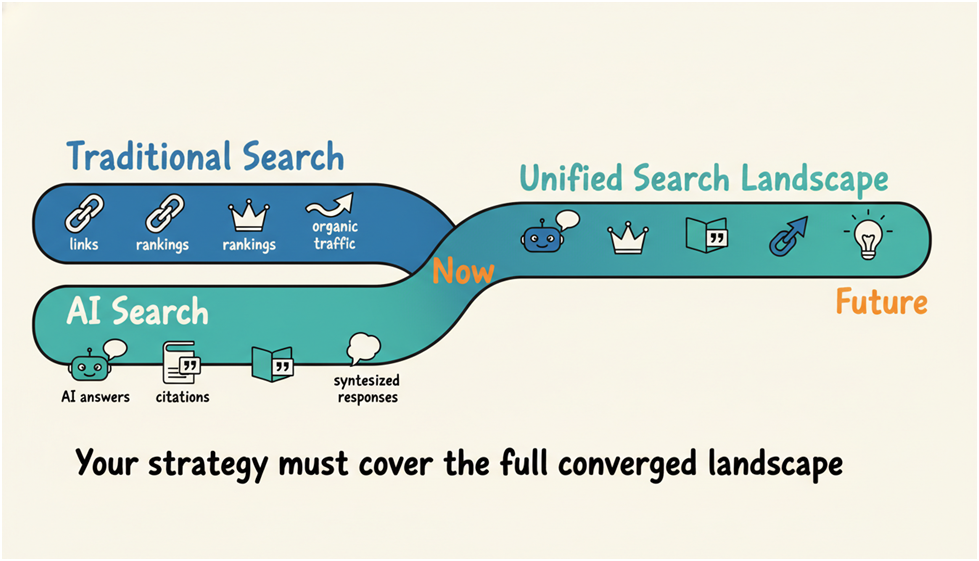
Your competitors are not debating which approach to choose. They are building combined strategies that cover every surface where their audience searches. The longer you treat AI SEO as optional, the wider the gap grows. Unified execution is the only path forward.