BMI and BMR Calculators for Smarter Health Planning
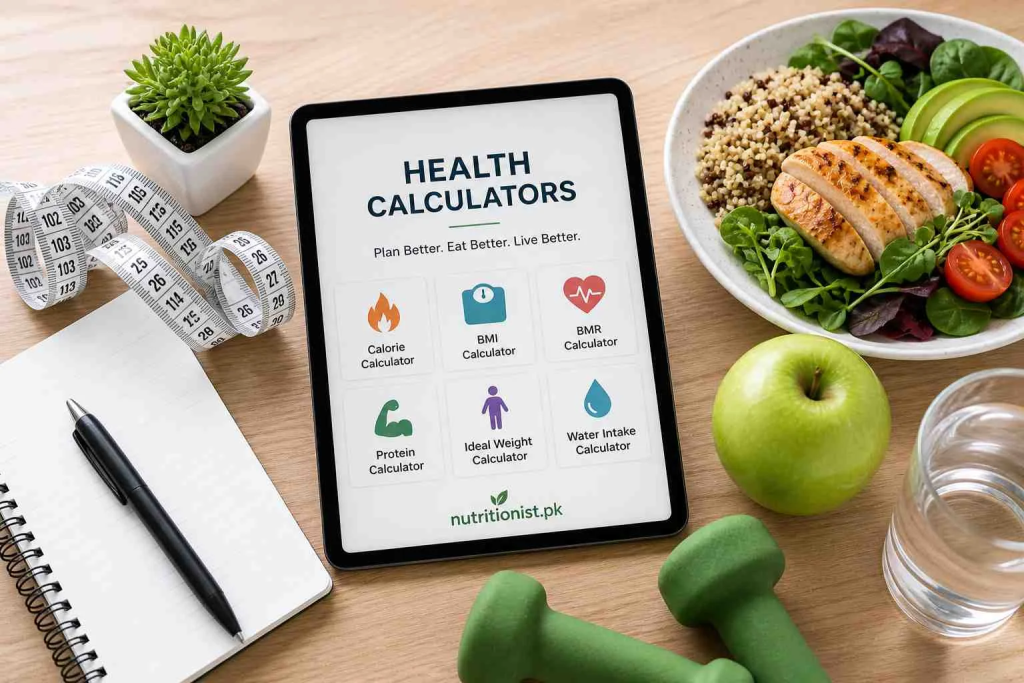
Understanding your body and daily energy needs can be useful when developing a healthier lifestyle. Two popular online tools that provide basic information are the BMI calculator and BMR calculator. These tools use simple personal measurements to generate estimates that can help users understand general body-weight categories and resting energy requirements.
While neither calculator provides a complete medical assessment, both can serve as educational resources. When combined with other tools such as a TDEE calculator, daily water intake calculator, and calories-burned calculator, they can provide a broader picture of everyday wellness and fitness.
Free online health tools provide convenient calculators for BMI, pregnancy due dates, water intake, calories, BMR, and TDEE.
What Is BMI?
BMI stands for Body Mass Index. It is a calculation based primarily on height and weight.
The standard formula is:
BMI = weight in kilograms ÷ height in meters squared
Online BMI calculators perform this calculation automatically.
The result is commonly compared with established BMI ranges for adults. These ranges are often categorized as underweight, healthy weight, overweight, and obesity.
However, BMI has important limitations.
Understanding BMI Limitations
BMI does not directly measure body fat.
For example, someone who has significant muscle mass may have a relatively high BMI despite having a low body-fat percentage.
BMI can also be less appropriate for certain populations, including children and adolescents, where age- and sex-specific growth considerations are used.
Because of these limitations, BMI should be viewed as a screening tool rather than a diagnosis.
A healthcare professional may consider additional factors such as waist circumference, medical history, lifestyle, body composition, and other measurements.
What Is BMR?
BMR stands for Basal Metabolic Rate.
It represents an estimate of the energy your body requires at rest to support basic physiological functions.
Even when you are sleeping or resting, your body uses energy for essential processes.
A BMR calculator may use:
- Age
- Sex
- Height
- Weight
Different formulas can produce slightly different results, so calculator outputs should be considered estimates.
Why BMR Is Useful
Understanding BMR helps explain why daily energy requirements are different from person to person.
Two people with the same activity level may require different amounts of energy because of differences in body size, age, body composition, and other factors.
BMR is therefore useful as a starting point for understanding energy expenditure.
It should not be interpreted as the exact number of calories a person should eat every day.
From BMR to TDEE
A TDEE calculator takes the concept of BMR further.
TDEE means Total Daily Energy Expenditure and attempts to estimate the total amount of energy used throughout an average day.
It may account for:
- Resting energy needs
- Physical activity
- Exercise
- Daily movement
- Other energy expenditure
Users generally select an activity category to generate an estimate.
For example, someone who works at a desk and rarely exercises will have a different estimated TDEE from someone who performs physically demanding work and exercises regularly.
Using a Calories-Burned Calculator
A calories-burned calculator can complement BMR and TDEE information.
It estimates energy expenditure during specific activities based on factors such as duration, body weight, and activity type.
Popular activities include:
- Walking
- Running
- Cycling
- Swimming
- Hiking
- Dancing
- Strength training
The result is an estimate, not a precise measurement.
Actual energy expenditure can vary substantially between individuals.
Add a Water Intake Calculator
Hydration is another important part of wellness planning.
A daily water intake calculator may provide an approximate target based on body weight and other factors.
Exercise, heat, humidity, illness, pregnancy, and other circumstances can affect fluid requirements.
People should listen to their bodies and follow professional guidance when special hydration needs exist.
Combining the Tools
Using several calculators can provide a more complete educational picture.
A person might start with BMI to understand a general weight-to-height measurement.
They could then use BMR to estimate resting energy expenditure and TDEE to understand approximate daily energy needs.
A calories-burned calculator can provide activity-specific estimates, while a water intake calculator can support hydration planning.
These tools are complementary rather than interchangeable.
Avoid Treating Numbers as Exact
One of the most important rules when using health calculators is to avoid treating results as absolute facts.
A calculator uses a mathematical formula based on the information entered. Real human physiology is much more complicated.
Energy expenditure can vary because of:
- Muscle mass
- Body composition
- Hormonal factors
- Activity patterns
- Sleep
- Health conditions
- Medications
- Environmental conditions
Therefore, calculator results should be used for general education and planning rather than as medical instructions.
Tracking Changes Over Time
Health calculators can be more useful when combined with consistent tracking.
Instead of focusing on one number, users can observe trends in:
- Body weight
- Exercise frequency
- Walking or activity levels
- Hydration habits
- Fitness performance
- Energy levels
Changes over time can provide more meaningful information than a single calculation.
When to Consult a Professional
Online calculators cannot replace a doctor, dietitian, qualified fitness professional, or other healthcare provider.
Professional guidance may be especially important when someone:
- Has a chronic medical condition
- Is pregnant
- Is taking medication
- Has a history of disordered eating
- Plans major dietary changes
- Is experiencing unexplained symptoms
- Is preparing for intensive physical training
Professional advice can account for individual circumstances that a basic calculator cannot.
Conclusion
BMI and BMR calculators are useful educational tools for understanding basic aspects of health and energy expenditure. When combined with TDEE, calories-burned, and water intake calculators, they can help users build a broader understanding of fitness and wellness.
However, these tools provide estimates rather than complete health assessments. The most responsible approach is to use calculator results as general information, monitor personal trends, and seek professional advice when individual medical or nutritional guidance is needed.
With realistic expectations and responsible use, free online health calculators can make basic wellness information easier to understand and apply.